
Thailand Custom, Culture and Social Norms
Thailand is country rich in cultural heritage and vibrant traditions, deeply influenced by its history, religion, and geographical location. The majority of Thais are Buddhists, and Buddhist principles play a vital role in shaping daily life and societal values. Temples, or wats, are not just places of worship but also centers of community life.
Family and respect for hierarchy are central to Thai culture. The family unit often includes extended members, and younger generations are taught to show deference to elders. The wai, a traditional gesture of pressing the palms together in a prayer-like fashion while bowing slightly, is a common way to show respect.
Festivals and culinary traditions also showcase Thailand’s unique culture. Celebrations like Songkran, the Thai New Year, involve water fights and rituals for cleansing and renewal, while Loy Krathong sees people float small offerings on rivers to pay respect to the water goddess. Thai cuisine, known for its balance of sweet, sour, salty, and spicy flavors, is a reflection of the country’s agricultural abundance and regional diversity. Sharing meals is an integral part of Thai hospitality, fostering community and connection in a culture that values togetherness and mutual support.
Thai customs and social norms emphasize politeness, respect, and modesty in all interactions. Clothing choices should reflect these values, particularly when visiting temples or religious sites. Visitors are expected to dress modestly, covering shoulders and knees, and to remove their shoes before entering. In public spaces, attire that is overly revealing is generally frowned upon, though beachwear is acceptable in resort areas. Overall, neatness and cleanliness in appearance are seen as signs of respect and self-discipline.
Gestures and body language carry significant cultural meaning in Thailand. The wai is a traditional greeting where the palms are pressed together at chest level with a slight bow of the head, often used to show respect to elders or monks. While the wai is common, its usage depends on social hierarchy; younger or lower-status individuals typically initiate it. Pointing with the feet, touching someone’s head (the most sacred part of the body), or stepping over people are considered rude. Public displays of affection are discouraged, as they are seen as inappropriate in a culture that values subtlety.
Behavior in public places is expected to align with the Thai emphasis on maintaining harmony and avoiding confrontation. Speaking softly, refraining from overt displays of emotion, and showing patience are all appreciated Thai customs and social norms emphasize politeness, respect, and modesty in all interactions. Clothing choices should reflect these values, particularly when visiting temples or religious sites. Visitors are expected to dress modestly, covering shoulders and knees, and to remove their shoes before entering. In public spaces, attire that is overly revealing is generally frowned upon, though beachwear is acceptable in resort areas. Overall, neatness and cleanliness in appearance are seen as signs of respect and self-discipline.
Thailand’s Three Seasons: Cool, Hot, and Rainy
Thailand’s tropical climate is divided into three main seasons:
Cool Season (November – February)The cool season is the most comfortable time in Thailand, with pleasant temperatures, clear skies, and low humidity. Average temperatures range from 18°C (64°F) to 28°C (82°F). It’s the perfect time to enjoy outdoor activities, festivals (like Loy Krathong and Yi Peng), and beach getaways.
However, as this is the peak season, expect higher prices and larger crowds. Early booking is recommended, especially during major events like Yi Peng and Christmas.
Hot Season (March – May)
The hot season can be intense, with temperatures soaring above 35°C (95°F), sometimes reaching 40°C (104°F). If you’re visiting during this time, make sure you’re prepared for the heat. The best way to beat the heat is by relaxing at the beach or near water. This is also the season for Thailand’s biggest festival, Songkran, the water festival, held in April.
Here are some of the best things to do in Thailand:
-
- Visit the Grand Palace – Marvel at the intricate architecture and rich history of the Grand Palace, home to the revered Emerald Buddha.
-
- Explore Koh Phi Phi – Relax on stunning beaches, swim in turquoise waters, and enjoy the tropical paradise that makes Koh Phi Phi world-famous.
-
- Island Hop the Andaman Sea – Discover hidden gems by visiting picturesque islands like Phuket, Krabi, and Koh Lanta—each offering natural beauty and adventure.
-
- Explore Thailand’s Iconic Markets – Wander through vibrant markets like Chatuchak and Damnoen Saduak, where you’ll find unique souvenirs, local flavors, and lively culture.
-
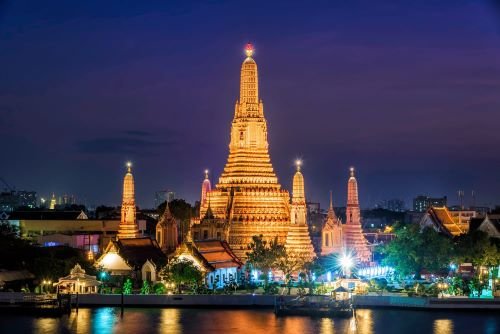
- Visit Wat Arun (Temple of Dawn) – Admire the majestic riverside temple with its beautifully detailed spires, especially breathtaking at sunrise or sunset.
-
- Discover Khao Yai National Park – Enjoy lush landscapes, wildlife, and serene waterfalls in one of Thailand’s most treasured UNESCO World Heritage sites.
-
- Cruise the Chao Phraya River – Experience Bangkok’s charm by cruising along the river, passing iconic landmarks and the city’s vibrant skyline.
-
- Taste Street Food in Chinatown – Indulge in bold flavors and authentic Thai dishes in Bangkok’s Chinatown—one of the best street-food destinations in the world.
-
- Enjoy a Traditional Thai Massage – Relax and rejuvenate with a world-renowned Thai massage known for its healing and energizing techniques.
Grand Palace 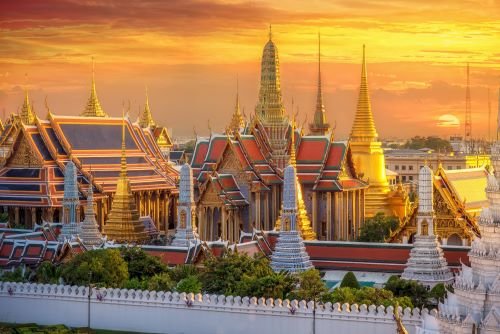 Koh Phi Phi
 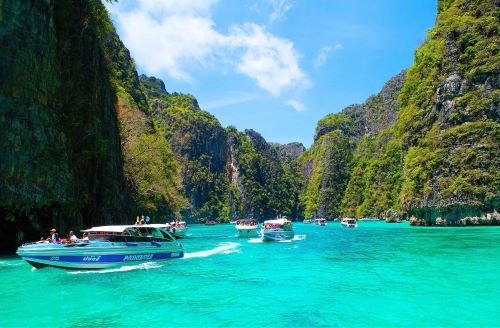 Andaman Sea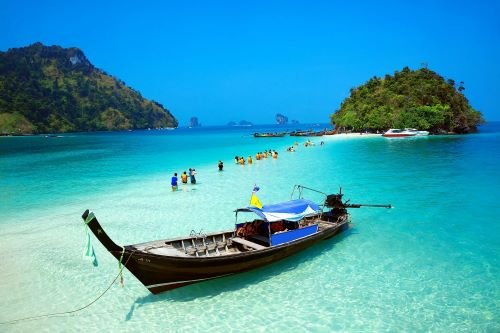
Sanduak Market 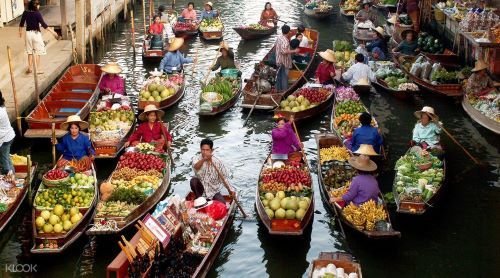 Wat Arun (Temple of Dawn )
  Yai National Park
Chinatown Street Food 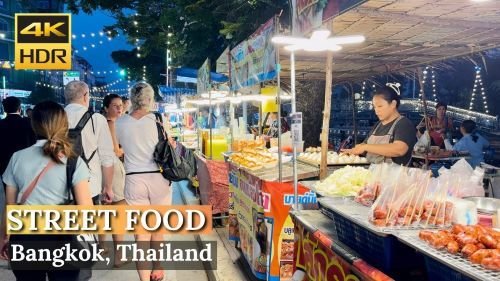
Travel is more than just visiting places—it’s about the experiences that inspire us along the way. Whether you’re seeking
adventure, culture, or simply a fresh perspective, Thailand offers something for everyone. Until next time, happy travels!